
We have already seen a couple of interesting contributions by Ritchie Jackson of the
Adaptive Architecture and Computation
programme at UCL, the
University College London:
<!–
472_hermite_splines.htm:<!– Ritchie Jackson [r
480_constructability.htm:<!– Ritchie Jackson [
483_project_vasari_api.htm:
Ritchie Jackson a
495_flatten_profile.htm:
Anyway, here is anot
–>
- Blends, Hermite splines and derivatives
- Complexity versus constructability
- The Autodesk Project Vasari API
- Flattening a non planar extrusion profile
Here is another topic, an introduction to the Revit API for programming novices for the
London Revit User Group LRUG.
Knowing Ritchie, it includes a couple of novel aspects:
- Focus on
VSTA macros. - Comparison of manual versus API approach.
- Focus on geometry generation.
The source code snippets cover the generation of some extremely simple shapes whilst the sample projects Ritchie presents feature the API workflow in more advanced examples:
- A single line.
- A simple box extrusion.
- A box with a cut-out.

- Iteration to generate a series of boxes with cut-outs to represent a boardwalk.

- An amphitheatre set-out:

- A roller-coaster reception with all its elements and materials:
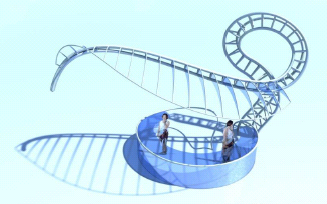
- A curved truss with all its elements:

- A conceptual high-rise model including
- Façade set-out
- Façade panels
- Façade materials
- Floor plates
- Beams
- Beam materials

The presentation includes more details on all of these items, obviously, descriptions of the workflows, and a detailed quick start guide for creating VSTA macros.
Some of these samples were also mentioned in Ritchie’s previous contributions.
Here is Ritchie’s complete
Revit API Introduction Presentation
with the accompanying
Notes
and
Source Code samples.
Very many thanks to Ritchie for sharing this with us!


Leave a Reply